Conscious Connected Breathwork helps with anxiety by working directly on the nervous system, not just the thinking mind. A specific continuous breathing pattern temporarily quietens the part of your brain that monitors, analyses, and keeps you braced. When that internal gatekeeper softens, your body can begin to process and release the physical tension it has been storing, sometimes for years.
The result isn’t just a calmer hour. With repeated sessions, your nervous system’s capacity to handle pressure without tipping into overwhelm gradually expands. Anxiety stops being something you manage moment to moment and no longer a default.
The rest of this article explains why nervous system regulation matters, and why the things you’ve already tried probably haven’t got you there.
Why coping with anxiety isn’t the same as resolving it
You know the feeling. Waking at 3am with your heart racing, for no clear reason you can name. The way your shoulders tighten during a routine meeting, or that constant background hum of urgency that follows you home even when, on paper, everything is fine.
You’ve probably already tried to do something about it. Therapy. Yoga. Meditation apps. A walk around the block when the pressure gets too much. Maybe a few minutes behind a locked door just to breathe without being watched.
These things help. For a while. And then the feeling comes back.
That’s not a failure of willpower, and it’s not a failure of the tools you’ve chosen. It’s something more specific, and once you understand it, the path forward becomes much clearer.
Why anxiety becomes stuck in the body
Anxiety isn’t a character flaw or a sign you’re failing to handle your life. After years of navigating high-pressure environments, whether in a demanding job or an intense home life, your body has simply become stuck in a pattern it learned for good reason.
What was meant to be a temporary response to stress has quietly become your default daily baseline.
To get through it, you likely didn’t just endure the pressure. You learned to quieten your feelings and brace yourself just to stay functional. That survival habit allowed you to manage the day, show up for the people who needed you, and keep going.
But keeping your guard up carries a hidden cost. Because your body is constantly holding itself together, it never receives the signal that it’s safe to let go. The tension accumulates slowly, in your jaw, your chest, your stomach, building over months and years into a physical weight your body is still carrying.
Why anxiety coping strategies don’t always solve the problem
When the pressure becomes too much, your body looks instinctively for relief. You develop subtle, everyday habits to give yourself a momentary break.
It might be the sudden craving for something sweet when a wave of tension hits. A fast walk around the block, hoping the change of air will reset your focus. Five minutes of scrolling just to give your mind somewhere quieter to be. For some people, a sharp layer of shared cynicism with a trusted colleague becomes a vital release valve, a way to discharge frustration that has nowhere else to go.
These habits are not failures. They are intelligent, short-term adaptations. Your body is finding ways to let off enough steam so you can keep functioning.
The problem is that a pressure valve only ever releases a small part of the excess in that moment. It does nothing to reduce the physically stored stress that’s causing the pressure in the first place.
Every time you use a temporary fix, you are managing a symptom while the underlying load continues to build. Over months and years, this continuous accumulation hardens into the new normal your body operates from. Your system stays on high alert because the stored stress is never actually reduced.
What the research says about breathwork for anxiety
There is now some direct research on Conscious Connected Breathwork and anxiety. A 2026 randomised controlled trial followed 107 adults through six weekly 90-minute CCB sessions delivered online. Compared with a waitlist control group, the CCB group showed a substantially greater reduction in anxiety symptoms, with a large reported effect size (Cohen’s d = 1.44). A second, smaller randomised controlled trial published in 2026 found that three weeks of CCB alongside sleep-hygiene education was associated with greater reductions in both state and trait anxiety in mothers of children undergoing cancer treatment. Both findings are encouraging, but the research is still early, with small samples and important limitations.
The underlying studies are:
– Blake, R. L., “Efficacy of online conscious connected breathwork in reducing symptoms of anxiety: A randomized waitlist control trial,” Journal of Affective Disorders, 394, 120565 (2026), DOI 10.1016/j.jad.2025.120565.
– J Pediatr Hematol Oncol. “Effect of Conscious Connected Breathing Added to Sleep Hygiene…” 2026 Sep 16. DOI: 10.1097
Conscious Connected Breathwork works differently, and the difference matters.
If you’d like to understand the mechanics in more detail, I’ve written a full guide to Conscious Connected Breathwork and what to expect from a session.
Why I work with breathwork for anxiety
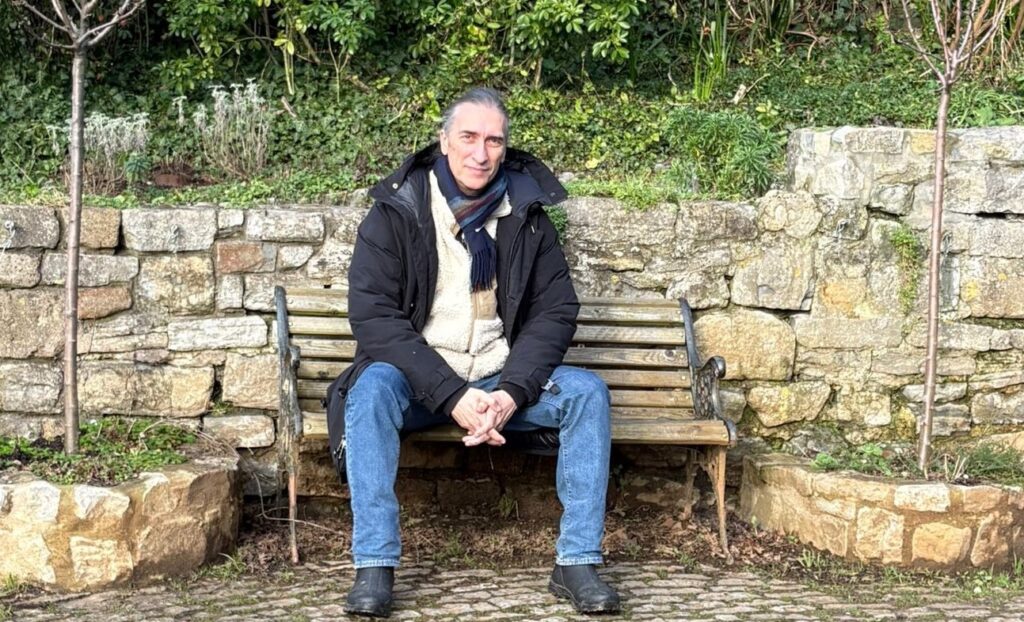
I spent over thirty years in City IT, managing teams, delivering under pressure, and maintaining the appearance of someone who had it all under control.
To the outside world I was calm and capable. Beneath that, my body was holding a full state of invisible tension. My survival tool for three decades was to flatten my feelings and exist in a kind of emotional grey, just to stay functional.
The way out wasn’t through more thinking or more talking. It was through finally feeling what my body had been carrying. Conscious Connected Breathwork gave me a way to safely bypass my own analytical mind and clear the physical build-up that thirty years in the City had left behind.
That’s the terrain I’m working from. Not a qualification I pursued from a comfortable distance. I know what it costs to hold yourself together for that long, and I know what it feels like when you don’t have to any more.
What happens during a breathwork session for anxiety?
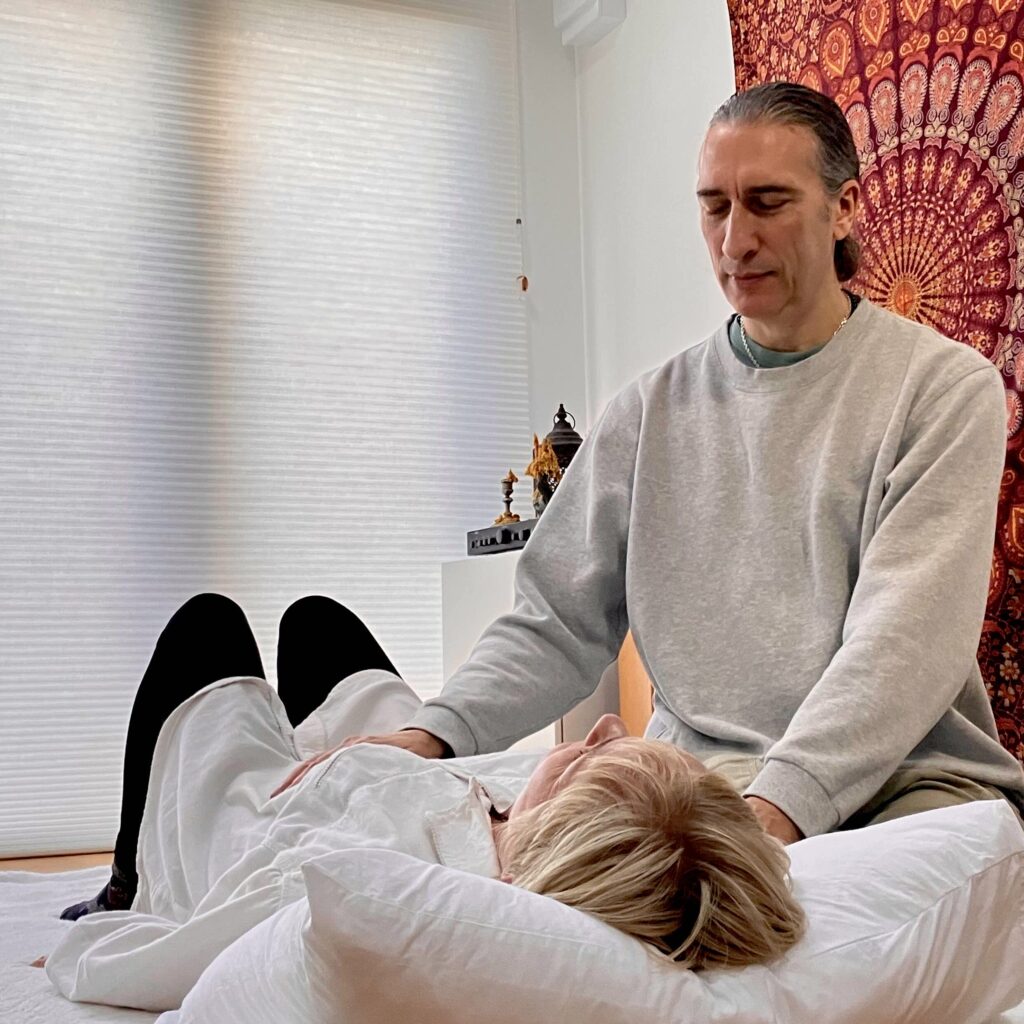
If the unknown is part of what’s keeping you from trying this, here’s a straightforward account of what happens.
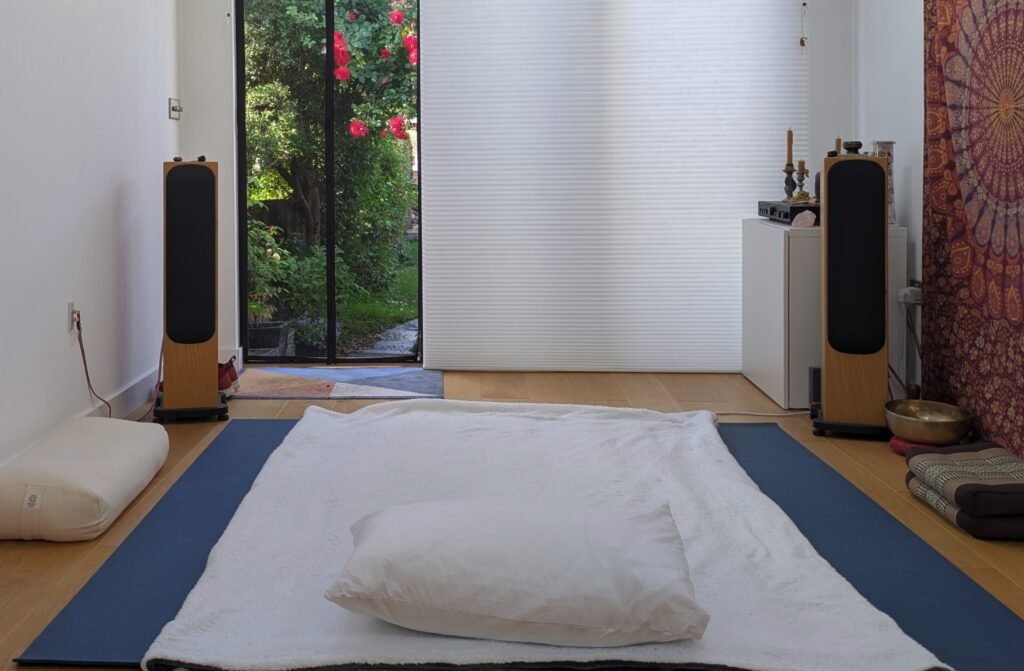
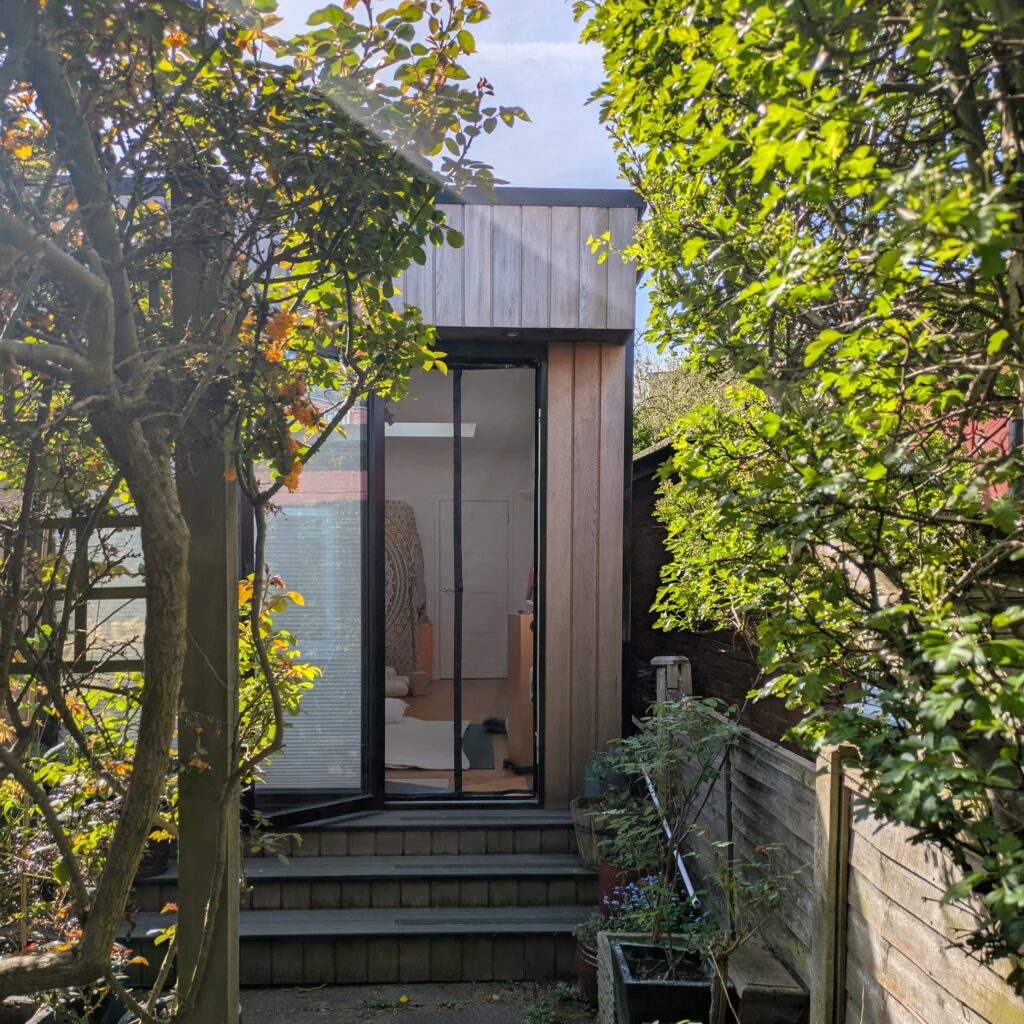
You lie down on a mat in a private, quiet studio. Before anything begins, I’ll ask briefly about what your body is carrying that day, not about your history. Then I’ll walk you through exactly what to expect so there are no surprises. You are in control of the pace throughout, with simple signals agreed between us so you can slow or pause the process at any moment.
The active breathing phase lasts around thirty minutes. As the rhythm settles, the mental noise gradually softens. Your body begins to do its work. I may use gentle, intentional touch on areas where your body is visibly holding tension, always with your explicit consent, to help those places release rather than brace harder.
This is followed by ten minutes of stillness, where your body absorbs what has shifted and begins to settle. Most people leave feeling quieter and physically lighter. Some feel tired, or more aware of where they’ve been holding on. Both are normal responses, and both mean something real has moved.
Your first session is 90 minutes to allow time for a full orientation. Subsequent sessions are 60 minutes.
If you have questions before taking that step, these are the ones I hear most often.
Frequently asked questions about breathwork for anxiety
Is breathwork safe if I have anxiety or panic attacks?
Yes, and anxiety is one of the most common reasons people come to a session. The breathing rhythm is introduced gradually, and you remain in control throughout. Simple signals agreed at the start mean you can slow or pause at any point. Sessions are trauma-informed and held in a private, soundproofed studio.
How many breathwork sessions do I need for anxiety?
It varies, and honesty matters here. Some people notice a shift after one or two sessions, particularly if they’ve already done therapeutic work and their body is ready to release. For most people, three to five sessions is a more realistic window for a noticeable change in their baseline. A block of three sessions is available at a reduced rate for that reason.
Can I do breathwork if I’m already in therapy?
Yes, and the two work well alongside each other. Talk therapy helps you understand your patterns. Somatic breathwork works on the physical layer beneath them, the tension your body is still holding regardless of how much insight you’ve gained. Many clients find the two approaches open up different things, talk therapy working through understanding, breathwork working through the body.
Could breathwork for anxiety help you?
Shifting a deeply entrenched nervous system baseline takes time. A single session can clear a noticeable layer of physical tension and give you a first-hand experience of what resolution actually feels like. But your body took years to build its current patterns, and it needs consistent, safe experiences to learn that it can soften them.
If you’ve tried the pressure valves and you’re ready to work on the underlying load, I’d like to have a conversation.
Are you still unsure?
When I started my journey with conscious connected breath work I had a healthy level of skepticism, but my results were impossible to ignore and it ignited a desire in me to share the benefits.
If you’d like to understand the mechanics in more detail, I’ve written a full guide to Conscious Connected Breathwork and what to expect from a session.
Alternatively, the best way to find out for yourself is to try it.
A free, 15-minute discovery call, by phone or Zoom, is the first step. No pressure, no obligation. Just space to ask questions and find out whether this approach feels right for you at this point in time.
Sessions are held at my private, soundproofed studio in East Barnet, EN4, with off-street parking and easy reach of Barnet, Southgate, Arnos Grove, and Cockfosters. Online sessions are also available.
For practical questions about what to bring, what to avoid beforehand, or whether breathwork is suitable for your situation, the session FAQ covers them.
Leave a Reply